

Who Killed Taylor Swift?
Don't look behind you


Taylor Swift and Travis Kelce arrived at Premier Smith International Airport on June 2. It was their first visit as a couple to the Commonwealth of Alberta. A large and enthusiastic crowd was gathered at the arrivals lounge, some of them having spent the entire night there. The extra security guards hired for the day had been dispatched by the same company that serviced West Edmonton Mall. They were the toughest and leanest in the industry.
Taylor was at her most resplendent and regal that late spring day. No face on earth had ever evoked greater feelings of joy. Her eyes had lost all trace of the cattiness that they had inadvertently conveyed during her younger days. As she walked hand in hand with Travis on the red carpet that extended all the way through open doors to the limousine outside, it would have been pure instinct on the part of the beholder to conclude that she was the most beautiful and happiest person on earth.
Travis, for his part, had developed a paunch and a heavy beard. He was, as a rather spiteful gossip-website declared that morning, in his late Jim Morrison phase. Was there tension in the marriage? If there was, it is perhaps a blessing that no one had to countenance the unraveling of the world’s First Couple.
No.
We were able to believe in Taylor — the real Taylor — right to the very end.
No one delivered the news of the death of Taylor Swift quite like CTV’s Stephanie Szymański. She was elevated from a regional television host into a worldwide celebrity. By some mystical mechanism I cannot explain, a portion of the grace that Taylor had once radiated was transferred to Stephanie. She became — for about one week — our Taylor surrogate.
The ailing form of morning television was made for mornings such as that one. The job of the television host is to be the same, comforting person morning after morning. The hair style will change, and the lipstick colour will occasionally vary. In November our beloved host will wear a poppy while in springtime she wraps herself in pinks and yellows. Yet her essential television essence never wavers. She never falters. She never has an off-day. While the rest of us are hung-over or miserable or angry or too lethargic to even leave our beds, she — the television host — is caffeinated, perky, pretty, ready.
Stephanie had recently dyed her hair an elegant burgundy colour, yet her eyebrows were still dark brown. For people like me, who have watched the historic broadcast from that day dozens of times, Stephanie’s hair/eyebrows contrast seems slightly discordant. But that only makes me love her more. Stephanie was so charming — so poised yet so casual, and so effortlessly friendly in a way that only seems possible in a Prairie city — my soul had been captured before she had even opened her mouth.
The fact that Stephanie could keep her composure and yet still communicate a hint of the grief that surely she felt— it was perfect. It is now well known that she refused to read from a teleprompter. Overnight, she had written a script and memorized most of it. She didn’t want there to be any contrivance in her narrative.
I remember the soft and gentle heat of June 2 and I remember thinking, I am breathing the same soft air as Taylor Swift! I remember thinking, Taylor will see the lush green trees of the river valley, just as I see them. Taylor will behold the majesty of the Hotel MacDonald, the same as I do every morning on my drive to work. Her presence made everything about Edmonton suddenly seem more significant and important.
At dawn, my personal Taylor4u appeared behind my right shoulder, looking into the mirror while I brushed my teeth. I spat out the frothy overflow, rinsed, and turned around so I could properly appreciate her thirty-five-year-old beauty.
“How should I get ready for the real Taylor being in town today, Taylor?”
Taylor4u laughed.
“Don’t worry! It will come naturally.”
“But what should I say? If I have just one chance to say something to her, what should it be?”
“Say ‘a pleasure to meet you,’” replied Taylor4u. “Come on, let’s go to the kitchen. The McCann’s Steel Cut Oats that I recommended for you won’t cook themselves.”
We continued to banter back and forth over breakfast. Her advice seemed so anti-climactic. She wanted me to say the most ordinary and expected things to the real Taylor Swift? Really? Why shouldn’t I try to distinguish myself? I was, after all, a writer. I should have memorable words to say during one of the most important moments of my life. But Taylor4u told me that all this pressure to come up with something special was imposing undue stress on me. She repeated: “Just be natural.” I became frustrated and asked her to leave. I wanted to be alone. What did it mean, just be natural—? No one can be natural, least of all in the company of a celebrity. I wanted to meet this moment with the best version of myself. With the remaining time I had before work, I decided to return to my room, turn on the laptop, and look at my past verse and prose to see if there were any striking fragments that could be repurposed for my evening encounter with the real Taylor.
I knew that she took her lyrics seriously. She had trademarked “this sick beat” and “the old Taylor can’t come to the phone right now.” This was a person who was bound to remember an ear-worm, and she would remember where she was standing and who she was talking to when she first heard it.
Some of the ideas I came up with were:
[Upon shaking her hand for the first time] “The real Taylor Swift, I presume!”
[When acknowledging my role as the mayor’s communications director] “He calls the shots and I fight the bots!”
[If there was an opportunity to explain in a bit more depth the importance of Taylor’s visit to Edmonton] “The real Edmonton needs a jolt of the real Taylor!”
Everyone congregated at Magpie Restaurant a few minutes prior to six o’clock. We had been vetted by security previously; the final ignominy was a comprehensive body scan and a temperature check, conducted in the back alleyway where the thugs from West Edmonton Mall were gathered, glaring at us. A faint smell of trash lingered despite the thorough cleaning efforts of the sanitation crew. On the other side of the building, 104th Street was closed to traffic. That was the side where Taylor and Travis would arrive in their limousine. The rest of us had to enter through the kitchen, even the VIPs.
The mayor was in good spirits. Generally he was an unflappable man, more concerned with the ceremony of his position than with policy and governance. He was very good at the ceremonial parts because he was convivial and even somewhat charismatic. Being around important people and large crowds gave him a mood uplift. When we entered the dining room proper, he was not surprised to see that all the tables had been pushed together to form a broad square. He had studied the seating plan comprehensively.
“We’re literally sitting next to the real Taylor,” I declared.
“We are,” the mayor replied. “I am sitting directly beside her, in fact.”
The thing about the evening’s events is that, up to the murder of Taylor Swift, everything proceeded exactly according to plan. There was nothing that was “off” or “ominous” about the gathering at Magpie Restaurant. When the mayor and I walked through the kitchen, we didn’t see the man who was, less than an hour later, going to hold a gun directly to Taylor’s chest and fire three rounds. What we saw was exactly what we had expected to see: staff of all stripes in a state of high activity, in nervous anticipation of the biggest night in the history of that restaurant’s existence — exactly as you would expect. When Taylor and Travis walked in at 6:37pm, we, the gathered crowd, erupted into a frenzy of clapping, cheering, and whooping. When Taylor approached me for a handshake (after Travis had almost crushed my fingers in his bear grip), none of the utterances I had prepared were ready at my lips. It was as if Taylor4u’s advice became my default programming for the moment. Taylor said, “Nice to meet you.” I replied, “A pleasure to meet you, too.”
I failed to distinguish myself in any way.
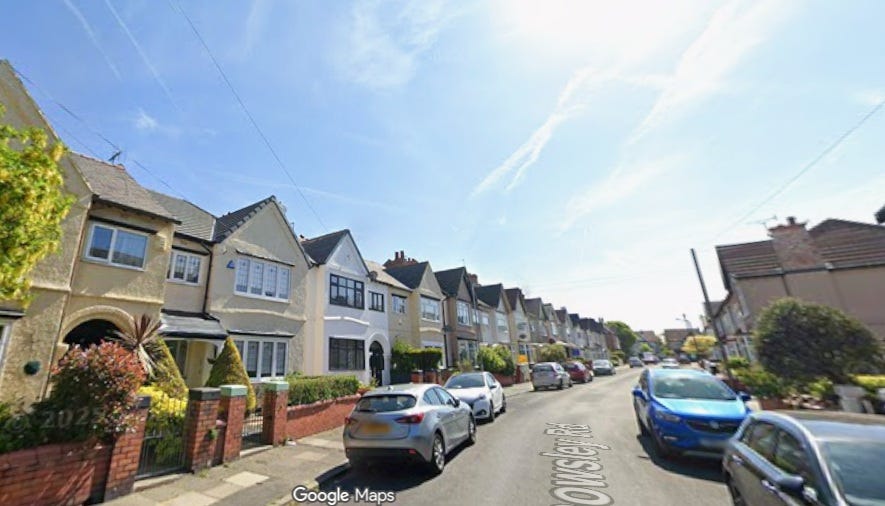
There were two murder suspects but only one of them has been remembered by history. His name is Daniel Osborne. The internet has been scrubbed for any malicious mentions of the other suspect. What I offer here is merely the humble suggestion that the question of who killed Taylor Swift should not be a simple binary. It isn’t either/or but rather both/and.
Osborne has been portrayed as an unhinged thug. I respectfully disagree. His journals, which entered the public domain late last year to almost zero attention from the mainstream media, reveal a tormented yet relatable young man. His father had been the glue that had held the Osborne family together. A fatal collision between his motorcycle and a Brinks truck on Yellowhead Trail started to break up the family. Osborne’s mother gave up on life in Edmonton. She preferred to hermit herself in her childhood home, the semi-detached house on Knowsley Road, Wallasey, a suburb of Liverpool. There she sat in her parents’ tiny yard, chain-smoked, and read Elena Ferrante novels. When her mind started racing too fast to follow long sentences, she moved indoors and watched TV game shows. After she had been absent from Edmonton for three months, Osborne felt compelled to visit her. He wrote in his journal that Knowsley Road was “not much better than a mausoleum.” At night, drunk teenagers would shout, whistle, and smash beer bottles against the pavement. Osborne tried to convince his mother to return with him to Edmonton. “I’d rather eaten broken glass,” she told him remorselessly.
Osborne flew home alone.
He soldiered through a semester of university but wasn’t motivated. He slept in and missed a critical final exam in History. He withdrew before there could be any more damage to his GPA. He enrolled instead in Culinary Arts at the Northern Alberta Institute of Technology. Over this period his journal contains caustic comments about “downward class mobility.” His drinking, never previously a problem, increased.
Yet he was very good at cooking. He was never drunk when wielding a French chef’s knife. Upon graduation he managed to convince the manager of Campio at Ritchie Market on Edmonton’s south side to give him a place in the kitchen during the busy weekend shifts. After each shift he would drink several complimentary whiskey shots in quick succession and then walk all the way back home, crossing the river over Dawson Bridge. He was frequently taunted and threatened by homeless people, which never seemed to bother him. The journey took well over an hour. “Enough to sober me up so I can repeat the ridiculous charade the following day,” he wrote.
In his fourth month at Campio, he wrote that he could no longer contemplate getting through a day without the assistance of alcohol. His sister could see his plight and she tried to intervene. His cooking experience was already sufficient to work at a decent restaurant job in a bigger city, she said. Why shouldn’t they share an over-priced apartment somewhere nice — somewhere like Gastown, Vancouver? Osborne refused to even consider the offer. “You’re going to be the successful one out of the two of us,” he said. “Don’t let me drag you down.” His sister moved away and Osborne was even more alone.
That summer, their mother died. The grandparents, having dared leave Knowsley Road for an excursion to London, returned home to find her cold body in the bathtub. Osborne flew over Canada and the Atlantic again, thinking it would be the final time. During the funeral, he helped prop up his aging grandmother on one side and his distraught sister on the other side as they stood at the edge of the pit into which the coffin was lowered. Osborne’s grandfather stood at a respectful distance and played a mellophone. When it was all over, Osborne demanded that he be given some time to himself. He walked out of the cemetery, passing the graves of sailors killed at sea and soldiers killed in Crimea, and eventually he found a table at Stanley’s Cask. He bought a pint, downed it quickly, and tried using his phone and credit card to buy more alcohol, yet somehow to no avail. Rather than relinquish his table, he stayed. The bar filled up. There were people all around. A band started to play Beatles covers. Some revellers invited themselves to Osborne’s table. Still Osborne stayed. The revelers asked him why he wasn’t drinking. He told them he had run out of cash — that he had just arrived from Canada to bury his mother at Wallasey Cemetery. The revelers asked him what his mother’s favourite song had been. Osborne replied, “Blowin’ in the Wind,” by Bob Dylan. The revelers asked the band if they could play it. The band obliged. Osborne drank two more pints as well as a dram of Writer’s Tears — on the house. When he walked back to Knowsley Road after closing time, he realized he had never before been quite so buoyed by the presence of other people. He wanted to move to Wallsey permanently but he had never enjoyed British citizenship. A long series of tedious, bureaucratic hurdles opened up in front of him, so daunting that he eventually conceded that he would not be in Wallasey for anything except annual pilgrimages.
Upon the resumption of his regular life in Edmonton, he made an honest effort to curb his drinking. He started sleeping with one of the Campio waitresses. He became an aficionado of documentary film, especially the films of the British documentarian Adam Curtis. His life hovered in an indeterminate in-between place. He wasn’t happy, yet nor was he entirely dissatisfied. The knowledge of an outside, a happy place he could retreat to — specifically, Stanley’s Cask and the peaceful tranquillity of Wallasey Cemetery — kept him going.
And then something strange happened.
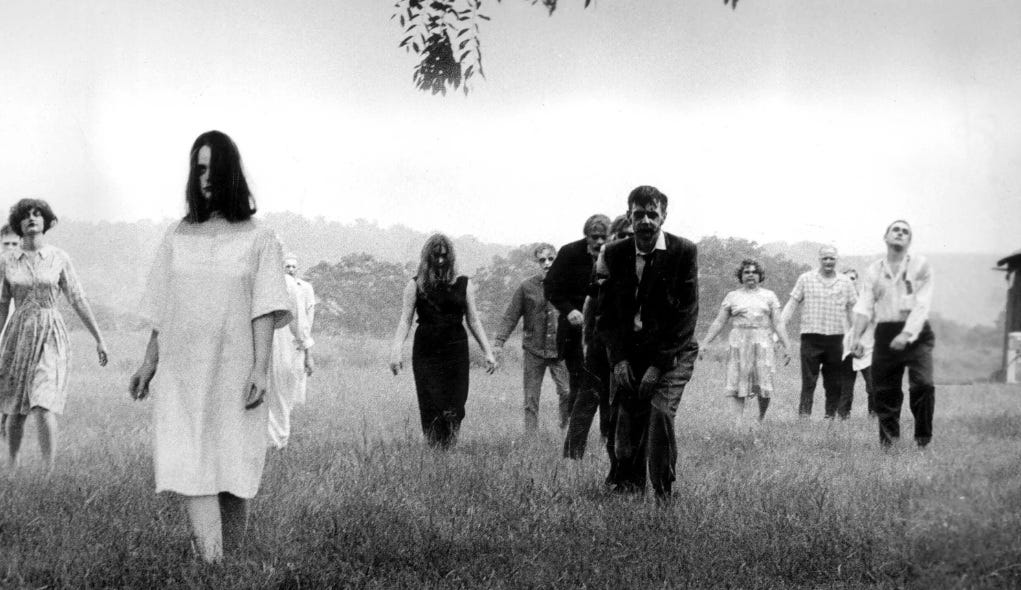
It had been three years ago to the day that Daniel Osborne had watched the coffin lowered into a pit in the earth. He was back at the same site. The gravestone that marked the site was small and plain and carried only the most rudimentary information.
REGINE ROBERTA OSBORNE
1991 - 2031
“In the fairy tales one does as one wants, and in reality one does what one can.” 1
Wallasey Cemetery was never busy on a weekday morning. Osborne could usually count on total solitude. His mother’s grave was far from the nearest road, far from all intrusions and disruptions. He always kneeled in front of the grave for about five minutes, eyes closed, trying his best to remember scenes from his life with his mother, fighting to keep his mind from straying. He did not believe in God and so he did not pray. Everything he believed in was right here: this silence, this perfect lush summer greenery, this weather, and the feeling of righteousness he experienced having no responsibility other than cultivating his grief. If there was rain, he let it fall on him unimpeded. (He was unashamed of trudging back to Knowsley Road as sodden wet as a stray dog.) If it was hot, he let his neck be scorched by the sun.
Stanley’s Cask opened at eleven. Osborne always claimed his table by eleven thirty. He ordered a glass of Staropamen and ate salt-and-vinegar Walker’s Crisps that he had purchased en route from the local convenience store. A perfect pairing, he would murmur quietly to himself. If a local wanted to talk, he was open to it. If no one wanted to talk, he turned the speaker of his phone toward his right ear and listened to his favourite soccer podcast. He was a fan of Liverpool Football Club, having come to his fandom only recently. If a real fan wanted to talk to him, Osborne made the usual perfunctory excuses for the paucity of his knowledge. “It’s hard to catch the games — in Canada they’re usually on at five or six in the morning!” Nevertheless, he enjoyed conversations that started with his own relative ignorance — ignorance about football and so many other things: local history, British politics, consumer products that he had never heard of, and so on. His ignorance made the locals generous.
On that particular day, Osborne was perfectly content — his Staropamen in one hand, the bag of Walker’s Crisps lying open on the patio table, a gentle sunbeam falling across the main part of the street. The patio was still in the shade, and so Osborne still wore his hoodie. For no particular reason, he had been staring at the curved corner edge of his phone. This was a detail that he would remember vividly afterwards. There was no reason to stare at it; visually speaking, it was uninteresting, and he could have listened to his soccer podcast just as easily with his eyes and head turned in any other direction.
Being so transfixed on that one spot, and having ceased to pay attention to anything in his peripheral vision, it was all the more shocking to him when he shifted his gaze and found himself looking directly at his mother. She was sitting on the two-foot wall that demarcated the patio and separated it from the pavement. She had on a long black coat, the kind that she used to wear during an Edmonton fall. Her coat was open. Underneath, she had on a light grey sweater and clean blue denim jeans. He glanced at her boots, which were brown suede. Something about her appearance made him think of her having just spilled out of the tumble dryer. He suspected her of being a hologram. But the more he stared at her, the more solid her body seemed. Her body didn’t have the spectral, luminescent quality of a Taylor4u. She was just as real as she had been when she was alive.
She was vaping.
“Mom,” he said. “Mom!”
She looked at him. She smiled. It had been so many years since a smile had come so easily to her lips.
“Daniel,” she replied. “Did you order one for me?”
She gestured to his glass of pilsner.
“No,” he answered. “I wasn’t expecting you. Where did you come from?”
“I came from Knowsley Road, of course!”
Once he had gotten over the shock, he escorted her back to the cemetery, pointing to her gravestone, imploring her to get back underground. She laughed. It was not scornful. She laughed buoyantly, as if he were just a silly boy. “Oh Daniel! The very idea!” There was a feeling of dread in his heart as he turned around and started walking back to Knowsley Road. She walked alongside him, and he wondered if he would ever be rid of her.
Turning on to the road he knew so well, he experienced the familiar sensation — people usually called it the stalking — and he turned around and saw that his Taylor4u was following him, but this time there was a second Taylor4u following his mother. He stepped and yelled.
“Really? Even at a time like this?”
“I’m always here for you, Daniel, you know that,” his Taylor4u cooed gently.
The second Taylor4u kept on walking after Osborne’s mother, looking rather anxious, as if worried about getting left behind.
“Look behind you!” Osborne called out to his mother. “Can’t you see her?”
Osborne’s mother didn’t turn. She walked straight into the wall of the semi-detached house on Knowsley Road and disappeared. HerTaylor4u also disappeared. (In this respect, Osborne’s mother was no different from any of the other dead people who had started to appear across the world over the course of that summer. They never looked back; they never acknowledged their Taylor4u. The technology didn’t work on them. They were completely impervious. But all these facts, which are now so well known, were at that time completely new to Osborne. He was finding out so many things for the first time.)
When he entered the house and didn’t find his mother anywhere he pushed straight past his grandparents, who told him he looked unwell, and he sat down in the back yard, in the exact chair that had been his mother’s favourite. He thought to himself, I will end up going the same way as her if I can’t think of a way to save myself.
After the appetizers were served, Taylor Swift stood up, raised her glass, and delivered a toast to the people of Edmonton. She was in mid-sentence when Osborne marched purposefully out of the kitchen, pulled a 3D-printer gun out from underneath his chef’s apron, and proceeded to fire three rounds that blasted Taylor’s body back on to the table. A volcano of blood erupted from her shattered chest. “Holy shit!” the mayor exclaimed. It was the first time I had ever heard him swear.
It took many minutes for the screaming and wailing to subside. The protocol officer ordered everybody to stay in the room and to be prepared to stay there until dawn. I admit I was astounded to see Stephanie Szymański arrive among us — visibly distraught in her own way, yet also able to overcome her feelings to put together her notes in a professional manner, swiping at her iPad, making a couple of quick phone calls, fixing her hair, etcetera. If I had not seen Stephanie operate in such a studious fashion, I might have, like the rest of you, fully believed the Lone Wolf theory. I might have taken Osborne’s manic journal entries as proof that he was the sole perpetrator behind Taylor Swift’s murder. Yet Stephanie’s appearance — within thirty minutes of the shooting, while we were all still sitting there listening to Travis’ inconsolable weeping — makes no logical sense if the Lone Wolf theory is true. If the murder of Taylor Swift was completely unexpected, how could it be that a breakfast show host was the first to arrive at the crime scene?
No. What I saw that night was carefully orchestrated, I am sure of it.
My theory is that a certain corporation, which will remain nameless, had decided that the real Taylor must die. The corporation’s eager “quants” had crunched the numbers. Those numbers revealed an impossible future, a tipping point, when the dead would outnumber the living. The fact that the corporation’s flagship technology had no power on the dead was well known. It was inevitable their market share would one day decline. It was unacceptable that the dead kept on walking forward, staring so intently at the world, never turning around, never hearing a single utterance from the legions of Taylor4us roaming everywhere. The dead were, in a word, useless.
Once it had been decided that the real Taylor must die, there was no going back. The only complication was contriving the perfect end for her so that only Osborne would be blamed. In that respect, the corporation executed a plot of absolute genius. They selected Edmonton in the Commonwealth of Alberta on the eve of Game Three of the Oilers-Panthers Stanley Cup final — a perfect setting. They selected Stephanie Szymański as the one who would first deliver the news. That way the narrative would ripple out in a controlled fashion from a provincial outpost to all the major news hubs. They selected a murderer who was all too happy to make his nightmare-life finally mean something. Hiding behind various shell companies, the corporation closed down 104th Street in the heart of downtown — and with far fewer headaches than shutting down any Manhattan equivalent. While the two young children of Taylor and Travis slept peacefully in their beds in New York City, an entirely new future for humanity was being written in the “City of Champions.”
The corporation will one day unravel the mystery of the dead. Thanks to the sensors that they have no doubt embedded everywhere on the real Taylor’s corpse — even in her decomposing brain — the last frontier of human consciousness will be traversed. They will understand why the dead never look back. They will learn why the dead are so totally apathetic toward Taylor Swift. And then the software developers will solve that problem, just as they have solved all the others. When that day comes, the miracle of their technology shall have dominion from sea to sea to sea. The dead will finally enjoy customized consumer tips, dependable therapy services, companionship on-demand, witty banter, dating advice, wardrobe recommendations — even live music if they want it.
Taylor Swift is dead. Long live Taylor4u.
NOTES
The only contemporary singers that really do it for me are Addison Rae, Chapell Roan, and Sam Fender. There, I said it. I am not a “Swiftie”!
Images
“Has Taylor Swift Written her Best Song (Ever)?” Electric Pop, May 16, 2024
https://www.eclecticpop.com/2024/05/has-taylor-swift-written-her-best-song-ever-whos-afraid-of-little-old-me.html
Knowsley Road, Google Maps
“Raising the Dead: Savvy Doc Puts George A. Romero’s 1968 Horror Classic in Fresh Light,” Original Cin, May 2020
https://www.original-cin.ca/posts/2020/5/28/raising-the-dead-savvy-doc-puts-george-a-romeros-1968-horror-classic-in-fresh-light
Elena Ferrante
Love the uncomfortable satire! I also love that Neil Tennant of the Pet Shop Boys referred to Swift as the Margaret Thatcher of pop music.
Love this. Would love your thoughts on this.
https://open.substack.com/pub/nadsdt/p/the-shift-of-the-swift-is-this-the?r=1cylkq&utm_medium=ios